Earth–Axus marriage treaty
Bride of AlvarThe Earth–Axus marriage treaty is the central legal fiction and political mechanism connecting Lucy Hammond’s body, Alvar’s kingship, and the security of two worlds. Conceived as a peace treaty between Earth and Axus, it promises to prevent an attack on Earth by making Lucy the future queen of Underland. Yet its protection is inseparable from coercion: Lucy is pledged before birth, given no meaningful opportunity to refuse, and later compelled to marry under threat to Emily Hall’s life. The treaty’s significance changes as Lucy moves from resisting an inherited obligation to affirming Alvar, Axus, and the future she wants with him.
Origins and Political Purpose
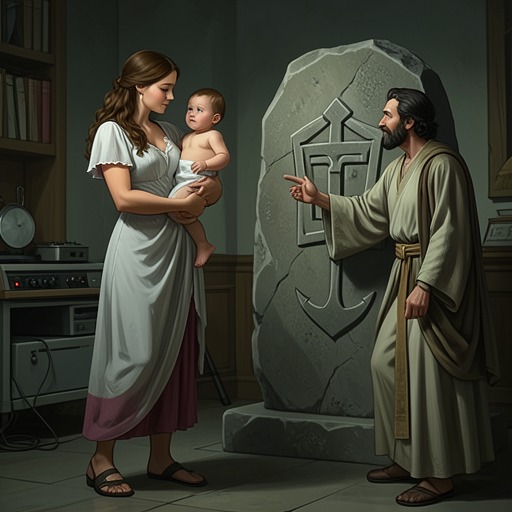
The treaty originates in a crisis surrounding Lucy’s birth. Hannah Delaney was told that the female child she carried would die unless Alvar used his people’s healing abilities to save her. Alvar supplied Cursed blood for the transfusion while Lucy was still in the womb, and Hannah promised that the surviving child would become his bride. The agreement therefore treats medical rescue and political allegiance as an exchange: Lucy’s life is preserved, but her future is assigned before she can consent.
Alvar later explains that the arrangement was also a defensive strategy against Saul’s possible return. Alvar had traveled to Earth while working to ensure that the tyrant king who had once ruled Axus could not regain power. Because Saul’s imprisonment could last only so long, Alvar sought a fail-safe that would further sever Axus from Earth. Lucy would reach adulthood by the time Saul’s sentence ended, allowing a marriage to establish a treaty and make the separation between the realms politically binding. An oracle had also identified Lucy as the deciding factor in whether Saul would rule again, turning her from a private bride into a strategic safeguard for an entire world.
The treaty is presented as necessary because some people of Axus are hostile toward humans. Alvar’s kingdom is powerful enough that, when he orders the other countries of Axus not to attack, they will obey; the marriage is consequently framed as diplomacy backed by royal authority. Its failure would not merely dissolve a romance. Hannah is warned that denying Lucy’s status as Alvar’s chosen bride would constitute a grave insult to Alvar and his people and could provoke war, which she believes Earth would lose.
Terms and Unequal Consent
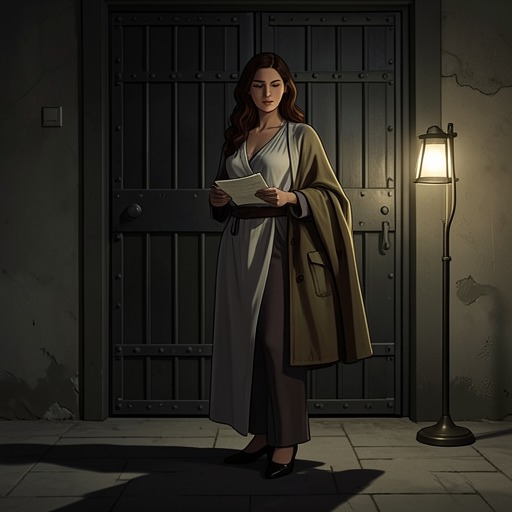
The written agreement is dated October 10, 1993, on Earth, and the twenty-third day of Havath, 2918, on Axus. Sworn under Elias, the God of Light, it identifies Hannah and King Alvar of Underland as the parties and states that the female child Hannah carries will be betrothed to Alvar as his future wife and queen. Its stated purpose is to secure peace between Earth and the realms of Axus.
The document also gives Alvar the right to return after the child reaches marriageable age and retrieve Hannah and her daughter so they can reside in Underland. In return, the nation of Underland is to provide their material and personal needs, protection from the Underland Guard, and instruction from the Institute of Underland in the customs and ways of its people. The signatures of Hannah and Alvar make the arrangement look reciprocal, but the narrative emphasizes the disparity behind those signatures: Hannah seeks a miracle for her unborn child, while Alvar gains a future queen and a diplomatic alliance.
Lucy’s rejection exposes the treaty’s conflict with personal autonomy. She has built a planned life with Mike Jones, her fiancé, whom she sees as a promise of stability and a way out of the disorder of her childhood. Their relationship is based on solid friendship rather than passionate love, but that comfortable arrangement is precisely what Lucy wants. When the treaty is revealed, she protests that she is already committed and asks how she can tell Alvar to choose someone else. Her mother insists that Lucy cannot be considered taken because the agreement has always designated her, and only her, as Alvar’s bride.
The treaty also separates marriage from sexual consent. When Lucy agrees to marry Alvar to save Emily from execution, she states that she will not have sex with him. Alvar accepts that condition, explaining that he must spend the night with her only to create the appearance that he is treating her as his wife, because an old law requires the practice to be taken seriously by the rest of Axus. The marriage therefore operates through several distinct layers: a prior betrothal, a public ceremony, a legal appearance of marital intimacy, and Lucy’s continuing refusal of sexual access.
Enforcement Through Crisis and Ritual
The treaty becomes immediately enforceable when Emily is captured by Remora’s forces. Alvar tells Lucy that Earth humans may be killed unless the marriage is sealed before Remora discovers that she has the wrong bride. He presents the wedding as the only way to make killing Earth humans a crime against Underland and to force Remora to release Emily and send her to Underland City. Lucy doubts that Alvar has not engineered the crisis to make her marry quickly; Alvar admits that she cannot know, but maintains that marriage is the only available solution.
The danger is made concrete by the gobli execution custom known as the Star Wheel, in which criminals are torn apart limb by limb before their heads are removed. This practice gives the treaty’s diplomatic language a bodily cost. The agreement may speak of peace, protection, and royal provision, but Lucy’s decision is made under the immediate possibility that her friend will be destroyed. Her marriage is thus publicly voluntary only within a sharply narrowed field of choices.
The wedding itself is a public performance of legitimacy. The priest asks Lucy and Alvar, before everyone gathered, to seal their union with a kiss. Lucy meets Alvar’s soft kiss because she wants to appear legitimate to the assembled people, some of whom may be Remora’s spies. The gesture is politically calculated, yet her response also reveals an involuntary attraction that complicates her resistance. The treaty’s ritual power lies in this double function: the kiss reassures witnesses that the alliance is real, while simultaneously making the imposed relationship emotionally more difficult for Lucy to dismiss.
Bodies, Succession, and Legal Afterlife
The treaty’s original bargain is tied to Lucy’s unusual biology. The Cursed blood infused into her veins before birth gives her rapid healing, and Alvar explains that it was the only known means of saving a still-developing fetus. He also identifies Lucy as the only person he knows with certainty who can carry his children without dying. Although he says that he does not need her to bear children, the treaty makes her compatibility politically valuable: she is not only an Earth-human bride but also a possible mother of a stable royal line.
That reproductive implication becomes explicit in the succession debate. Sola Brightfeather, ruler of the Skylands and Lucy’s friend, pledges allegiance to Lucy and Alvar as the respected rulers of Underland and predicts that they will have two children. One child will resemble Lucy, while the other will resemble Alvar and have his red eyes. Once their heir reaches the traditional age of twenty-five, the Underland Council will judge whether that heir is worthy to succeed them. The treaty therefore extends beyond the first marriage into a dynastic future in which the political union is embodied by descendants.
The arrangement also intersects with competing legal and social systems in Axus. The wedding must satisfy an old Underland law concerning the appearance of marital relations, while the threat from Goblia reflects a separate religious and matriarchal order. In Goblia, Remora rules a hive in which only one female is permitted to live, male drones commonly die in infancy, and female hatchlings are destroyed unless Remora selects one as a princess. Fletch explains that Saul installed Remora and encouraged these old ways to weaken the last organized gobli city. Against such fragmented and coercive systems, the treaty attempts to make Underland’s royal marriage a stabilizing cross-world institution, though it too initially depends on the power to compel.
Transformation into Chosen Alliance
Lucy’s understanding of the treaty changes as she learns what Alvar has done for Axus. After witnessing his memories and seeing the unity he created among peoples and races once divided by war, she rejects the idea that the Curse or Saul’s tyranny should define him. She embraces Alvar and tells him that she does not want to play any part against him and is not ready to return to Earth. Instead, she wants to see the Axus he has shaped through his desire for peace and restoration. Her language recasts the treaty from an arrangement that confines her to one that gives her a position from which to recognize and participate in Alvar’s political work.
This does not erase the treaty’s coercive origin. Lucy’s initial commitment to Mike Jones, her resistance to being promised before birth, the threat to Emily, and the required public performance of marriage all remain part of its history. What changes is Lucy’s relation to the role the agreement assigned her. She begins as a child treated as collateral for diplomacy, becomes a bride forced to act under emergency conditions, and ends as a queen who claims the realm and relationship for herself.
At the close of the book, Lucy refuses a return to Earth because Alvar is not there. She declares that she loves him, loves Axus and Underland, wants to see them prosper, and wants to have his babies. The treaty’s final significance therefore rests in its transformation from imposed contract into chosen political and emotional commitment. It never ceases to be the instrument that secured peace, but Lucy’s final decision gives that instrument a new meaning: the alliance is no longer sustained only by a promise made by her mother, royal law, or fear of war, but by Lucy’s own declared desire to share Alvar’s kingdom and future.